
20. Dezember 2010

EU-Russia relations end year on upbeat note
The tone was set at the EU-Russia summit in Brussels on 7 December. The European Union and Commission Presidents, Herman Van Rompuy and Jose Manuel Barroso confirmed the friendly atmosphere when they both sportingly congratulated Russian President Dmitri Medvedev on his country's successful bid to host the 2018 Football World Cup. In the process, Russia defeated rival bids from three European nations: England, Belgium and the Netherlands. Barroso, who knows a thing or two about summits – this was the 13th he had attended with Russia – described it as "probably the best summit I have participated in so far with Russia". He also pointed to the "range and depth of our discussions and the very good atmosphere" that now characterises the partnership.
The tone for the meeting had been set by the breakthrough in Russia's efforts to join the World Trade Organisation with signature of an agreement between Moscow and Brussels that removed the remaining bilateral problems. This followed a similar accord between Russia and the United States in October. Van Rompuy described the accord as "a paramount step forward" which the world is closely watching". He added: "We should now focus on the multilateral negotiations so that Russia can become a member of the WTO as soon as possible." Although Medvedev did not confirm this would happen in 2011, as the EU would like, he stated that accession to the WTO "now became a reality".
The meeting also put flesh on the bones of the EU-Russia Partnership for Modernisation that was agreed at the last bilateral summit in Rostov-on-Don on 1 June 2010. Contacts since then between Russian and EU officials and business communities have identified various activities and projects under the main headings: opportunities for investment, promoting a low-carbon economy and energy efficiency, liberalising trade, aligning technical regulations and standards and collaborating on research. The two partners will participate in a Council of Europe project establishing an appeal system for criminal and civil court cases in Russia.
The EU-Russia Industrialists' Round Table is to start a series of workshops focusing on different innovative sectors such as pharmaceuticals, health, transport and the environment. Finally, further support is to be given to existing higher education cooperation and youth exchange programmes.
The EU's Foreign Policy Representative Cathy Ashton briefed European leaders at their Brussels summit this week on the progress which had been made in EU-Russian relations in recent months. Noting that the two held more bilateral meetings than the EU did with any of its other strategic partners, she concluded there was still untapped potential in the relationship. She pointed to the opportunities for a more joined up and broader approach on issues such as visas and human rights in Russia and greater cooperation on foreign policy. She would also like to see more consistency and exploration of possible synergies across a range of EU policies. Finally, she pointed to the need to develop a problem solving capacity, which is currently absent.
The two-day meeting in Strasbourg this week between delegations from the European Parliament and Russia's State Duma also confirmed the progress made in the past 12 months. This considered the recent bilateral summit, the modernisation programme and deliberations of three working groups the two delegations established earlier in the year. The first is dealing with common European identity, cultural space, academic and research cooperation; the second with a visa regime between Russia and the EU, environmental protection under sustainable development and civil society in Russia; and the third with the role of NATO, the EU and Russia in maintaining security and President Medvedev's plan on the new European Security Agreement.
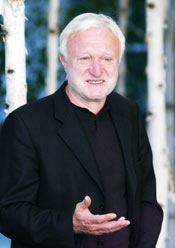
Werner Schulz, a Green MEP and a vice-president of the European Parliament's delegation offers a positive assessment of developments. "In my view, we have made some progress over the past 12 months. At our last meeting in January, we were even unable to agree on a joint statement. That is why we decided to reset our work and establish three working groups," he says. The format obviously worked as agreement between the two delegations on a joint statement on 16 December demonstrates.
Schulz, who is heavily involved in the activities of the second working group believes there is now a better understanding and recognition by the Russians that there are difficulties in the Russian Federation with human rights and the rule of law. "We have tried to figure out some important starting points over this year to see how we can go forward from here. Also, despite being unsuccessful in the past, we managed to get Vladimir Lukin, the Russian Federation's Ombudsman for Human Rights, to our meeting in Strasbourg this week," he says.
While reviewing the different areas of cooperation, the joint statement refers specifically to concerns over "attacks on human rights defenders, lawyers and journalists and calls for complete and independent investigation of these cases" and calls on governments to tackle all forms of discrimination.
The European Parliament was more explicit this week when it urged the Russian judicial authorities to press ahead with the investigation of the death in prison in November 2009 of the Russian lawyer Sergey Magnitsky. It described this as "an outstanding example of the serious shortcomings within the country's judicial system" and called for sanctions, such as an EU entry ban, on Russian officials involved in the case if nothing were done. In similar vein, several leading western politicians publicly called in the past few days for an end to "persecution" of jailed Yukos oil tycoon Mikhail Khodorkovsky.
It is a sign of the growing maturity of the bilateral contacts that neither criticism blew the wider contacts off course.