
13. Juli 2012

We don't sponsor special agents or spies
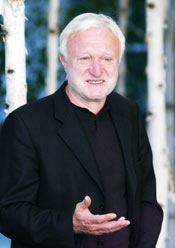
 Interview of the EU-Russia Civil Society Forum (Polina Baigerova) with Werner Schulz about the bill obliging all NGOs who receive foreign funds to declare themselves "foreign agents".
Mr. Schulz, you have been an avid fighter for the promotion of civil society in Russia over the past years. What do you think about the bill obliging all NGOs who receive foreign funds to declare themselves "foreign agents"?
I am shocked about the restrictions of civil liberties in Russia today. For some time we were under the impression that Putin would seek some sort of rapprochement with the protest movement and initiate a dialogue. To be quite frank, I've never trusted in this, but now everything turns much worse than I have ever feared. The concessions that were achieved by the protesters since the end of last year are now taken back again. Worst of all things, this is pushed through by an illegitimate Duma. We all know that the absolute majority of United Russia was not the result of correct elections. But still, such crisis bills are ruthlessly passed. The right of assembly is restricted, NGOs get stigmatized. What will be next?
The actual problem Russian NGOs are facing is exemplified by Golos, the election monitoring organisation. They filed grant applications for financial support of their activities with the Russian government, but they never got approval. It is quite clear that such organisations can only exist with external funds.
How will the bill affect the collaboration with civil society in Russia?
The European Parliament will try to prevent the stigmatisation and defamation of Russian NGOs and their work by all means. Ultimately, the European Union is also among the financial supporters of civil society in the Russian Federation. But we do not sponsor special agents or spies. We support the exchange of experience between NGOs! Such reproaches are absolutely unacceptable. We will continue to support this exchange by all means.
Together with Knut Fleckenstein, chair of the Delegation to the EU-Russia Parliamentary Cooperation Committee (PCC), we appealed to the Duma and the Chair of the Russian PCC Delegation. We expressed our utmost concern about further repressions that might result in serious strains to the European-Russian cooperation and announce to raise the topic and put it on the agenda of the upcoming parliamentary meeting at the end of August in Saint Petersburg. I do hope that our appeal will be heard.
What might be the role of the EU-Russia Civil Society Forum?
We were able to observe a promising emerging dialogue between the NGOs in the EU and Russia at the EU-Russia Civil Society Forum. So this is clear evidence how helpful such a platform can be. It is also important for us politicians because it provides direct feedback from civil society in both Russia and the European Union.
The new bill that could blame Russian NGOs of alleged espionage will also affect the Forum's work. At the same time, the Forum is supposed to facilitate the essential exchange between the people – to do exactly what the Russian leaders keep talking about when they discuss visa facilitation. Such repressive measures do not help the Russian government to achieve this goal.
What is your call to the government of the Russian Federation?
If I were in their position, I would think twice about the potential consequences of such steps. Today, we are about to sign a treaty on cooperation and partnership and a treaty on modernisation. It has been clearly argued for years that modernisation in Russia is urgently needed - first by Putin, then by Medvedev, now it's Putin's turn again. The processes are strongly affected by the current developments. Unless the restrictions are dismissed, the treaty on modernisation will not be signed. The Russian Federation needs a modernisation treaty with their own people first!
What would be your advice for Russian civil society activists?
Do not surrender! This is important. Don't allow to be provoked, do not bow to any repressions. The Russian citizens should be given the opportunity to stand up for their rights. We need active and committed citizens who interfere. Only then they can break up old patterns and pave the way for a thriving modern society. I experienced this myself in the GDR in 1989.
Interview conducted by Polina Baigarova, EU-Russia Civil Society Forum