
07. März 2012 meeting report

Russia after the elections: Change lies in the hands of civil society
In cooperation with European Exchange, on 07 March 2012, I invited members of parliament, representatives of the Commission and the Council and others interested in the topic to a hearing on the results of the Russian presidential elections. The hearing was comparable in format the event of 13 December 2011 (Assessing the Duma elections, German-language article), with GOLOS presenting the results of its election monitoring activities followed by a discussion of the implications the election results for the political situation in Russia.
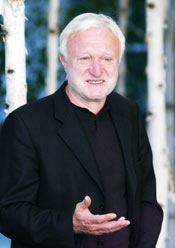
Stefanie Schiffer (photo, centre) of European Exchange launched the talks by describing European Exchange’s work with GOLOS, the Russian election-monitoring organisation. Lilia Shibanova (photo, right) from GOLOS then reported on results and the way the elections proceeded. The presentations were supplemented by a political analysis of the situation, developments and consequences from Nikolay Petrov, Carnegie Moscow Center. Also taking part in the event were Pavel Khodorkovsky, the son of Mikhail Khodorkovsky, and Vladimir Kara-Murza, Russian journalist and member of the democratic movement Solidarnost. Numerous guests were in attendance, and a lively discussion followed the speakers’ contributions.
Election campaign: One-sided and unfair
The presidential elections in Russia can no more be described as fair than can the Duma elections of last December – on this the speakers and the other Russia experts present all agreed. Again and again, it was emphasized that it is not the Election Day alone that is at issue. According to one speaker, the non-approval of opposition candidates (and in particular of Yavlinsky) and the totally one-sided election campaign had rendered the presidential elections a farce. Petrov described Putin as having deliberately sought out only weak adversaries for the presidential elections. “As though selecting the opponents, the referee and the conditions for a sports competition for a result that had been determined in advance.”
The still Prime Minister Putin took only a three-day leave before the election. The rest of the time he remained in office – and drew on all the state resources to hand to run his election campaign.1 Russian television programming was dominated by Vladimir Putin to an even greater extent than usual; newspapers printed his programmatic articles on foreign, economic, social policy and geopolitics – a publication of the election programme even before election campaign period had officially begun. This, while the other presidential candidates were barely visible.
Election day: More manipulation “from below”
Election day saw violations of electoral law on a massive scale once again. Election observers from all over Russia reported being hindered in their activities or witnessing busloads of people being brought to the polling stations – from whence they were then brought to the next polling station to vote again there.2 There were reports of problems during the counting of votes at every third polling station. Petrov noted that in such circumstances it was necessary to draw a distinction between direct falsification and serious violations in the run up to the elections. He explained that ballot stuffing and falsifying voting records were not the only ways to manipulate elections. He pointed out that there are many ways to put people under pressure in a system of government dominated by corruption. One sees this in regions reporting 100% voter turnout, where Putin received 99% of all votes cast. Petrov spoke in terms of electoral manipulation “from above” and “from below”. In his view, the heightened attention of the public during the presidential election meant that it was primarily the second strategy that was adopted.
Election monitoring: Successful or pointless?
Election observers did not have an easy time of it during this election either. The independent election monitoring organisation GOLOS was once again subjected to massive pressure;
many observers were barred from the polling stations on election day. What made this round different from the Duma elections though, was that this time there were far more election observers and their ability to assert themselves was greater. That made it possible to thwart and document attempts at electoral falsification at many locations. Partly as a result, the numbers at other polling stations had to be pumped up even higher. According to Petrov, in some instances the differences between the returns at neighbouring polling stations were enormous.
The body of evidence collected is quite extensive. GOLOS is already working on systematizing and assessing the complaints submitted, cooperating closely in those efforts with election observers from political parties and other election monitoring organizations3. However, Lilia Shibanova is not anticipating success. “The machinery of power is working for the Central Election Commission,” she said, predicting that the complaints would have no consequences.
Protest movement: Not just about the elections
Yet Lilia Shibanova, for one, showed little sign of discouragement. She said she was pleased that Russian society had finally awoken from its apathy. She believes that Putin’s victory does necessarily represent a failure of the protest movement. She noted that Putin would have won in the first round of elections in any case, probably with a bit over 50% of the vote. The demonstrations, she explained, were not about percentages or specific problems in conducting the election. People were protesting against the entire power system that has been built by the political elite. “What is making people so angry is the sense that there is no way to remove those in power”, said Shibanova. For that reason she expects the protests in Russia to continue – despite the fact that Putin still has the support of the majority of the Russian population.
Nikolai Petrov shared that opinion: “The protest did not begin with the elections nor will it end with the elections,” he said. The Duma elections were merely the trigger, the final straw that brought people out onto the streets. He also pointed out that observers have been seeing growing social protest throughout Russia in the past two years. So, despite frequent claims to the contrary, the protest movement is not restricted to Moscow and St. Petersburg. Dissatisfaction, in Petrov’s view, is great: “Today, it is the elections, tomorrow it might be the announcement of reforms or specific changes that trigger a wave of protest”.
Putin’s presidency: Campaign promises and the war against “traitors”
Putin is well aware of the situation in Russian society. It is the reason for his particularly active campaign, his many trips to various regions, the huge stage-managed events in Moscow, intended to demonstrate how popular he remains with the majority of the population. But he cannot completely disregard the protest movement. Petrov explained that Putin was faced with a difficult decision before the presidential elections: if he permitted the observation of the elections, the returns would be less favourable. If he prevented it, the protest movement would grow. Now that the elections are over many are worried about possible retribution: “Putin’s rhetoric indicates that there is good reason to expect repressions in the near future. He does not accept the results of the election monitoring; he speaks of traitors and enemies”, said Lilia Shibanova. She explained that what sets the present situation apart is that this time it is not a question of specific individuals who can be intimidated or thrown behind bars, but of a large mass of people. In her view, the Kremlin is still not quite certain how it should deal with the situation.
“Putin must admit that, for the first time, he is not the president of the entire Russian people”, said Petrov. The political leadership in Russia has lost its legitimacy – a legitimacy it needs to implement unpopular reforms that have already been announced. Petrov noted that it is already apparent that the social-sector reforms will trigger a great deal of dissatisfaction
among the Russian public. The campaign strategy that Putin chose is now proving to be his downfall. Petrov noted that Putin will have difficulty introducing reforms after having promised security and the preservation of the status quo. Putin would need an additional 750 billion dollars in the budget to meet his campaign promises in the social sector. And he does not have them. Pavel Khodorkovski corroborated this: “Putin as the guarantor of stability is a myth”, he said, pointing out that Putin would need an oil price of 130 dollars a barrel to fulfil to his campaign promises. He described that scenario as extremely unrealistic in the context of the global financial crisis and noted that the first protests were not yet over, and new ones are already on the horizon.
Nikolay Petrov pointed out that even if the social protests fail to result in Putin’s immediate removal, it is quite conceivable that he will not last to the end of this term in the seat of power. Petrov believes that Putin, once the clear leader of the political elites in Russia, must now make compromises with them, something he is not prepared to do. So, those elites are now faced with a choice: loyalty to Putin or modernisation and thus self-preservation. “The continuation of the process of transformation that has been initiated is not solely dependent on the social protests that triggered it”, said Petrov.
Outlook: The battle continues
One could sum up by saying that both the speakers and the experts attending the event looked to the future with optimism and energetic commitment. Lilia Shibanova said that it was necessary now to concentrate on the regional elections next October and the 2015 Duma elections, adding that Russia needed a new policy and, above all, new faces in the political arena. The people in leadership positions today are not popular enough to be genuine political leaders, in her view. She noted that the image of the existing parties is bad, adding that that of the unregistered parties is also poor.
Nikolay Petrov also drew attention to the fact that 30–40% of the Russian population stayed away from the polls. He believes that this segment of society should be integrated into civil society. Pointing out that Russian society has had little experience with organising itself, Pavel Khodorkovsky suggested that the EU could be of great assistance in that area, not as a source of funding but through its expertise.
“All autocratic regimes eventually come to the point where the people say: Enough!”, said Vladimir Kara-Murza. Now it is up to Russian civil society to play and active role in the transformation process. An ambitious assignment.
--------------------------------------------------------------------------------------------------
1 In Russia, a serving prime minister standing as a candidate for the presidency may continue in office for the period of the campaign, since the prime minister is considered a “Category A” civil servant. However, there is the provision that he must not misuse his administrative resources to forward his own political interests (which includes campaigning at public events, in addition to the use of staff, premises or means of transport for campaign purposes).
2 This form of electoral fraud is known as carousel voting in Russia: huge groups of “voters” illegally use documents reserved for absentee voters to vote at multiple polling stations.
3 League of voters, Grazhdanin Nabludatel, RosVybory